
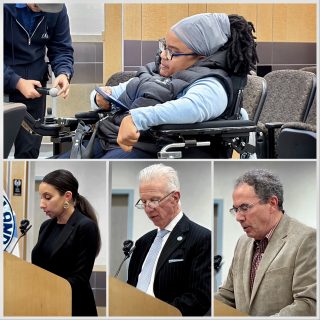
This new law hopes to combat damaging digital Deepfake images, video, audio and more
Rockland County lawmakers have unanimously passed the Damaging Deepfake Act, a local law aimed at stopping the spread of AI-generated fakes that steal identities, destroy reputations, and fuel online abuse.
The new law makes it a crime to knowingly create or share digitally deceptive media – hyper-realistic images, videos, or audio that falsely depict an identifiable person without their consent. Those who weaponize artificial intelligence – AI – for harassment, fraud, or impersonation can face fines or jail time, with tougher penalties for repeat or criminally motivated offenses.
“The rapid spread of manipulated videos and audio doesn’t just distort reality – it endangers reputations, safety, and trust,” said County Legislator Dana Stilley, who sponsored the bill. “When someone’s face or voice can be stolen with a few clicks, we must take action. With this legislation, we are taking a firm stand against the misuse of artificial intelligence and safeguarding the rights and reputations of our residents at a time where truth and authenticity are increasingly under attack.”

Deepfakes have exploded in scale, jumping from about 500,000 “creations” in 2023 to a projected 8 million in 2025. Nearly 98% of all deepfake videos are pornographic, overwhelmingly targeting women. AI-driven scams and impersonation frauds are also skyrocketing, costing U.S. victims more than $12 billion in 2023, with losses expected to triple by 2027.
Tiffany Mason, a member of the Rockland County Developmental Disabilities Subcommittee, spoke of how online manipulation impacts members of the disability community.
[Mason] shared how stereotypes are falsely used to depict how people with disabilities feel – often depicting these individuals as depressed, sad and lonely, something Mason states is not the case. She also stated that some fraudsters use AI photos and videos to pretend to be people with disabilities to collect mony from fake GoFundMe – often without victims ever being aware.
During a public hearing, Stefany Ovalles, Director of Immigration and Human Trafficking Services at the Center for Safety & Change, said that even without recent technological advances, the nonprofit saw a rise in revenge pornography in their domestic violence cases in both family and criminal court. Perpetrators use sexually explicit material taken with or without the victims’ consent and use it as a mechanism to further coerce and control their victims. With recent technological advances, perpetrators can now control and coerce their victims without even having access to this sexually explicit material, she said.
Sextortion cases affecting youth are also rising, she said, including a local school district where six to seven male youths came forward to say they had been victimized by sextortion by a fellow classmate.
“Passing the Damaging Deepfake Act allows us as a community to be proactive in serving victims and survivors of all crimes but it especially helps us protect women and children who are by far statistically most likely to be victims of domestic violence and sextortion, respectfully,” Ovalles said.
Artificial intelligence can clone a person’s voice, face, or gestures with alarming precision, allowing bad actors to fabricate explicit content, fake political messages, or even impersonate business leaders to steal millions.
The results are devastating – from emotional trauma and reputational damage to financial loss and public mistrust, said Rockland County District Attorney Thomas Walsh, who added that one of the greatest challenges governments face is that the rapid growth of artificial intelligence often outpaces the reaction of the law.
“That gap creates opportunities for people, for predators…to manipulate these new tools in ways our current legal framework cannot always adequately address,” District Attorney Walsh said. “We need to change. We need to keep up with the times. The Damaging Deepfake Act seeks to safeguard the people, the people that we all serve.”
He said his office is all too familiar with how the misuse of technology harms vulnerable members of our society and noted that the lasting harm to children can go on for decades. Unfortunately, he said, sometimes what goes on the internet will never come off the internet.
Rockland Community College President Dr. William P. Mullaney said that around the country, high school and college students have found their faces inserted into false and explicit images created by artificial intelligence.
“These are not harmless pranks,” Dr. Mullaney said. “They are acts of digital violation that can harm victims and follow them for years to come. This is why this local law is so important. It makes clear that consent matters, even in the digital world. It gives law enforcement and community institutions like ours a framework to respond when technology is misused to cause harm and it reinforces the message that in Rockland County, truth, dignity and accountability are not optional.”
While there are existing federal and state laws that touch on issues related to digital replicas, the U.S. Copyright Office, which has been increasingly focused on the issue, has found that these laws are insufficient to fully address the harms associated with deepfakes.
By adopting the Damaging Deepfake Act, Rockland County joins a small but growing number of local governments confronting the human cost of AI abuse and sending a message that digital deception is not acceptable and will not go unchecked.
“Deepfakes are digital lies that can destroy lives in seconds,” said County Legislature Chairman Jay Hood Jr. “When people can’t be sure what’s real, misinformation spreads faster and the harm can be lasting. This local law gives us tools to help protect residents and businesses and I am proud to have voted for it.”

Improper AI Use Now Comes with Jail Time added by rctadmin on
View all posts by rctadmin →
You must be logged in to post a comment Login