
On the morning of Saturday, January 3rd, Americans woke up to the breaking news that Venezuelan President Nicolás Maduro had been captured by U.S. forces and brought to the United States to face federal drug trafficking and narco-terrorism charges. The announcement sent shockwaves through political circles worldwide and hit especially close to home in communities like Rockland County, New York, where a large Venezuelan immigrant population closely follows events back home.
In Haverstraw, 35-year-old Meiling Aquino reacted with mixed emotions. “We are so happy – yet I really don’t know what will happen.” Meiling, a native of Venezuela who came to the United States at six years old in 1996, has seen firsthand what political instability can do to ordinary people. “Maduro was very bad, yes, but who will replace him? Maybe someone worse,” said Meiling, reflecting a sentiment echoed by Venezuelans both stateside and abroad.
Meiling’s concern is not unfounded. Since 1999, the country has had only two long-standing leaders, Hugo Chávez and Nicolás Maduro, a fact that has created a highly controlled political landscape with little true competition. This environment, compounded by rampant corruption and economic collapse, has contributed to the mass exodus of millions of Venezuelans in search of safety and stability.
For many Venezuelan immigrants in Rockland, life in the U.S. offered what their homeland could no longer provide: relative security, opportunity, and community. One local example is Meiling’s uncle, who after years of working at a neighborhood deli was able to buy the business in 2006. Today, the shop has become a social hub where patrons gather to watch CNN en Español, cheer on La Liga soccer, swap stories, and support one another, a vivid contrast to the realities faced by those who remain in Venezuela.
Even in these areas, fear and uncertainty persist, both about conditions back home and in the U.S.. Meiling’s community has also been affected by heightened enforcement actions under President Trump, including intensified Immigration and Customs Enforcement (ICE) raids that have reignited anxieties many had hoped to leave behind upon arriving in America.
The tension between seeking refuge and confronting new challenges in the Land of the Free has created a complicated set of emotions for many immigrant families.
Even as Venezuelans in Rockland count their blessings, Meiling admits she worries for relatives still in Venezuela. The decades-long rule of Chávez and Maduro saw the rise of armed groups known as colectivos, which acted as paramilitary enforcers and were implicated in violence against dissenters. This legacy of fear means that many Venezuelans, even after years abroad remain on edge about what the future holds.
Maduro’s capture and arraignment in Manhattan federal court, where he has pleaded not guilty to multiple charges, marks a dramatic new chapter in Venezuelan politics. It remains to be seen how this historic event will ultimately affect ordinary Venezuelans, and whether it ushers in genuine reform or merely shifts uncertainty from one arena to another is anyone’s guess. For now, communities like Rockland County watch closely, torn between relief, skepticism, and the hope for a better tomorrow.
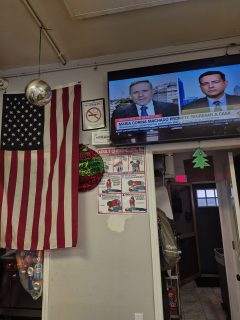

What Do Rocklanders Think About Venezuela? added by Nicholas Cantone on
View all posts by Nicholas Cantone →
You must be logged in to post a comment Login