
At the time that Larry played with the A’s, Pearl Harbor had already been attacked by Japan, on December 7, 1941, and the US was engrossed with WWII. The war effort entailed a total commitment of resources, human and natural, and there was severe rationing on products like rubber and gasoline, which severely hampered the general public’s ability to drive vehicles. There was much debate as to whether to continue professional baseball during wartime. It lasted until President Franklin D. Roosevelt issued what is known as the “Green Light Letter” to Baseball Commissioner Kenesaw Mountain Landis. In it he opined that to the best of his judgment, during a time of severe hardship and pressure, baseball would give a big boost to the public’s morale and therefore should not be discontinued. He also emphasized that the players could not be excused from military service. The result was that although professional baseball continued during the war, many of the MLB players during the span from 1942-1945 were either too young or too old to be drafted, or had medical or other deferments.
During the war, besides Larry Eschen, there were two other Rocklanders who made it to the Majors.
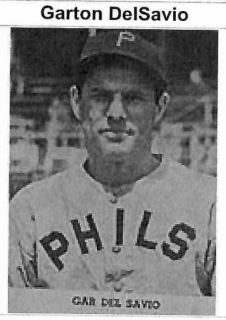
Garton del Savio, as they say, lasted in the big leagues just long enough to have a cup of coffee. A native of the Bronx born in 1913, del Savio spent 9 years in the minors until he finally got his big break with the Philadelphia Phillies. In 1943, Gar made the team out of spring training for opening day. He played in four games and had one hit in 11 times at bat. It is a baseball custom that every player is awarded the ball used in his first Major League hit. He must have coveted and treasured that ball till his dying day. However, during his short MLB tenure, he made three fielding errors and was relegated to a minor league AAA team, never to be called up again. Later in 1943, Gar enlisted in the Coast Guard and served during WWII. He retired from baseball in 1946.
After baseball, del Savio worked for the NYC Department of Sanitation, and upon retiring in 1976 he moved to Bardonia where he lived for 30 years until his death in 2006.
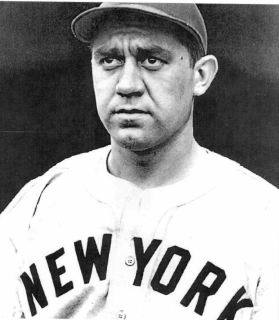
The other Rocklander to make it to the big leagues during WWII is Bill Drescher of Congers. Bill was a catcher who played professional baseball for 12 years, from 1941-1952. The highlight of his career was 1945, during which he was a member of the NY Yankees for the full season, playing in 48 games, with a .270 batting average, and knocking in 15 runs. It is worth noting that although he did not hit a home run that year, he only struck out five times in over 130 plate appearances.
Bill returned to the Yankees for the start of the 1946 season, but by that time the war was over and he was sent down to the minors after appearing in five games. His replacement was a young catcher named Yogi Berra, who would remain with the team for the next 19 years, becoming a Hall of Famer and one of the greatest catchers to ever play the game.
Bill continued playing through 1954, ending his career with the Syracuse Chiefs as a player Coach. Upon retirement from baseball, he made his home in Congers where he was a member of the Fire Department.
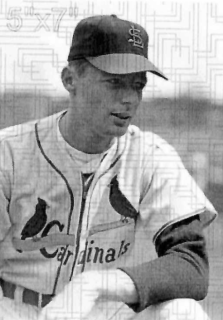
The last Rocklander to play in the Major Leagues during the pre-expansion era was pitcher Fred Hahn, a southpaw. Born in 1929, Fred signed with the Nyack Rockies, a Class-D team, in 1947 at age 18. After several years in the minors, he made the St. Louis Cardinal’s opening day team in 1952. Among his teammates was Stan Musial, one of the greatest players of all time. Fred made his debut on April 19, throwing two innings in relief against the Chicago Cubs in Wrigley Field. Although he did not give up an earned run, following the game he was demoted to the Cardinal’s AAA team, and would never play another game in the Major Leagues. Fred retired from baseball in 1959 and would get a job with Orangeburg’s Department of Public Works. He passed away in 1984 at age 55, and is buried at Tappan Cemetery.
Back in the day, Major League baseball players, especially those who didn’t last long, rarely left the sport financially independent. They played primarily for glory and the love of the game. And as such, following their retirement from baseball, and because they were still relatively young men, most had no choice but to get regular, mundane jobs, be they white collar, blue or grey, in order to pay their bills like everyone else. The Rockland-Five were no different. After baseball, they led “normal lives” and integrated themselves into their communities. But despite this, they would always retain a bit of the pixie dust that fell on them the very moment that they first stepped onto the field wearing their Major League uniforms and heard their names announced before thousands of fans. Even in death, they continue to belong to a very exclusive fraternity. Each one has a Wikipedia page set up by baseball fanatics, and any baseball related item that belonged to them is swiftly purchased on eBay. Yet, it should be emphasized that they were also valued and beloved members of their towns and villages in Rockland, neighbors whose names and accomplishments need not be forgotten.

Our Forgotten But Notable Neighbors: Five MLB Rocklanders, Part Two added by Jerome Kleiman on
View all posts by Jerome Kleiman →
You must be logged in to post a comment Login