
Boots On the Ground
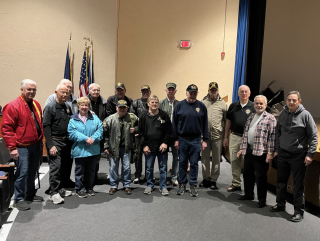
Do you remember where you were and what you were doing on January 27th, 1973? Can you think back and visualize what event on TV was headlined on January 1st, 1969? Well if you’re like the average Senior Joe or Jane, it’s a reach to recollect. However, if you’re a member of Vietnam Veterans of America – Chapter 333 it’s just two of many dates that are burned into your memory forever. What will be burned in my memory forever is March 19th and March 24th, 2026 when I spent two days at Felix Festa Middle School in Clarkstown with this awe inspiring group of Vietnam Veteran heroes.
For the past 26 years, the “Memories of the Wall” program has been an annual tradition in a wonderful collaboration between the Vietnam Veterans of America – Chapter 333 and the Felix Festa’s Social Studies Dept., providing the students with an up close and personal opportunity to learn about and reflect on a time when our country was shaken to its very core by division as a result of the USA involvement in the Vietnam conflict. Through direct interaction with the Vietnam Veterans, who are now seniors, the Felix Festa students have front seats to this history.
Backpacks in tow, hundreds of students entered the auditorium to begin a journey that commenced over fifty years ago, led by the Vets who knew all the twists and turns of the terrain. While pundits allege that dates ground us and certain numbers shock us… 58,281 dead American soldiers, comprised of the sons, brothers, sisters, fathers, mothers, best friends of America’s future, and three million dead Vietnamese citizens who were loved and cherished by their families. How does one recover? Never forgetting, always respecting, and now diligently educating a younger generation of the very real faces of war. Or, in the words of the Vets, “Please try to imagine.” Imagine that you are the people that you are seeing on the screen, viewing with their eyes the conflict that was then and the memories that can never be erased and continues to this very day.
The “Memories of the Wall” Presentation takes you beyond the names of the over 58,000 servicemen and eight servicewomen killed in action memorialized on the wall located on the National Mall in Washington, D.C. While the history book statistics inform you that the youngest American Soldier killed in Vietnam was 15 years old, that the average age of a combat infantryman was 18-20 years old, and that those American soldiers killed in action were, on average, a tender 23 years old, really bringing into focus this painful history, it is the stories commemorating these lives shared by mementos left at the Wall that quickens your heartbeat.
Since the wall was completed on November 13th, 1982, paid for entirely through private donations, over 400,000 items have been left to honor and commemorate these Veterans. The National Park Service, which is the agency in charge of this monument, owns a warehouse in Maryland where all the cherished items left at this memorial are cataloged and preserved, and then often displayed in rotating exhibits throughout the USA.
During the eerily quiet school assembly, the students heard about the Mom of a Vet who left a torn, tattered teddy bear that was dearly loved and cherished by her son in his childhood to comfort him for eternity at this memorial. We saw the picture of a Vietnamese soldier and his young daughter left at the Memorial Wall by an American Veteran. This Vet carried the picture of this unknown Vietnamese family (lost in the heat of battle) with him for 22 years after the death of this Vietnamese soldier in the war. The note this American Vet left at the Wall was simple and eloquent: “Dear Sir, For 22 years I have carried your picture. Rest in Peace.” We also learned that this same American Veteran returned to Vietnam 33 years after the war with a copy of the picture to reunite with the young girl pictured, now a forty year old woman, to try to repair in whatever way he could the lasting trauma inflicted on both of them by this war. Heads spinning, the captivated audience continued to focus on the stories of the Medics and Nurses who held the hands of the dying soldiers and then in their grief wrote to their dead comrades families about their bravery, children who wrote that they were proud of being told that they were the image of their deceased parent, and a scrap of paper from the brother who promised to continue to take care of his deceased big brother’s prized car.
But our journey wasn’t finished yet. Next stop was the Felix Festa School Library. That was when our Veteran-led journey became even more personal. The students were welcomed into the bedroom of a typical young person of the era. Vinyl records of all the popular singers, posters of all the movie and sports stars on the wall, a school sweatshirt, even a copy of the ever useful Cliff Notes lying on the bed, to “help” the student “further understand” their reading assignment. Next came the mock ups of “LIFE” magazine featuring pictures of American soldiers lost in just one week of the war along with the jungles they were fighting in. The young learners were even offered the experience of wearing a soldier’s real helmet from this conflict. Most personal of all, were copies of photos of our Veteran guides – from then and now.
Then the heart-pounding, labored-breath-inducing, eyes-burning part of the story took shape. The Vets, who were guiding us through this distant and far off land shared their personal experiences – the good, the bad, the funny, the not-so-funny, and the tragic. We learned about the different areas and jobs they were assigned to, their food experiences, which ranged from good to bad to horrible, the hygiene opportunities (or lack thereof), the letters from home, Agent Orange, cancer (13 types known to date), PTSD, battle wounds, friends they lost, friends they made, “creatures” (snakes, fish, centipedes, scorpions, monkeys, rats, bugs) they encountered, “Pungi Pits” (holes with spikes in them), and “Bouncing Betty’s (shrapnel) that they were always on the lookout for, cigarettes whose new purpose during this war was for removing leaches, the pro and anti war sentiments in the media they faced while in combat, and then the outright ingratitude and misunderstanding they faced when they returned home. We then learned about how healing begins.
So how does this story end? Thankfully, it doesn’t. Reconciliation doesn’t end at the doors of Felix Festa, it continues to the far reaches of Vietnam where this group continues to visit and work on funding and building schools in this far off land. Both there and here understanding, healing, and relationships are being forged and maintained. It’s a story about not forgetting the past, while trying to heal, and all while educating our future.
In this writer’s personal paraphrase of Albert Camus:
“Great works are often born on a street corner or in a restaurant’s revolving door or at the American Legion Post in Pomona by the Vietnam Vets of America – Chapter 333. For further info, contact this wonderful group at PO Box 243, New City, New York 10956.

Senior (Life)Style with Eileen O’Brien added by rctadmin on
View all posts by rctadmin →
You must be logged in to post a comment Login